
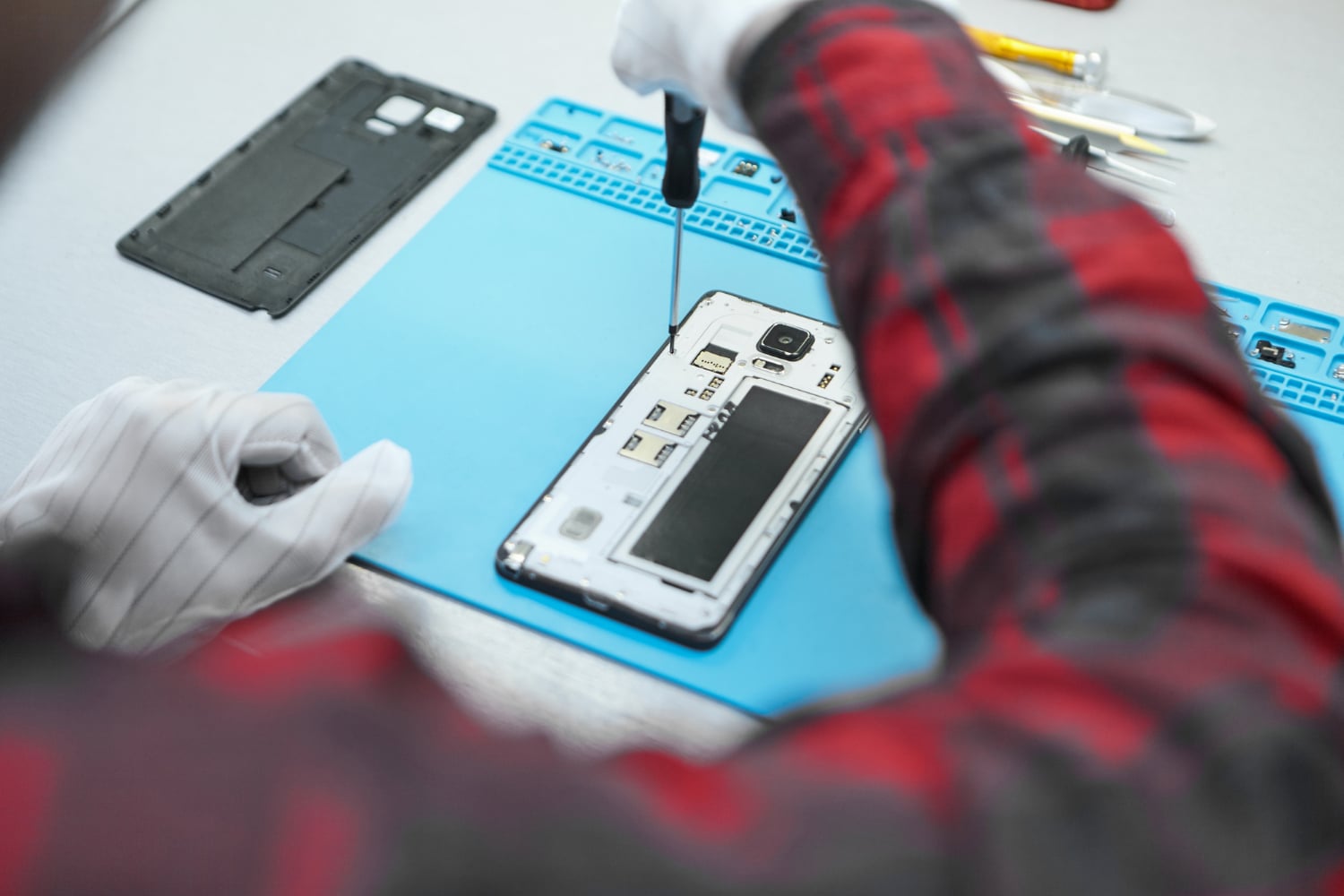
Buying a high-value electronic device is not a simple decision, even when the price is clear. When a device shows wear or damage, consumers weigh several things before cost even comes into play: how much they trust the warranty, whether authorized repair is easy to access, what the device is worth on resale, how convenient the options are, and whether it’s starting to feel outdated. Choosing to repair, replace, or upgrade is rarely just a matter of comparing repair cost to replacement price.
To understand how GCC consumers make these decisions, it helps to look beyond the final purchase and at the thinking that leads up to it. In most cases, upgrading appears to be the preferred choice, supported by the appeal of premium brands, trade-in offers, and financing that make newer devices feel more affordable. Repair tends to be a fallback rather than a first choice, and replacement is often something consumers are pushed into rather than something they plan for.
This article explores what shapes these choices across the GCC, from the role of premium electronics and warranty confidence to the cost and convenience of repair. It also looks at what drives replacement, why upgrading has become increasingly attractive, and what these shifting behaviors mean for electronics brands.
Electronics as Investments in Status and Utility
Buying a premium phone, a large television, or a high-end laptop rarely comes down to performance alone. These are devices other people see at work, at home, and in social settings, which means how well they work and how they look both shape the decision.
That balance between performance and appearance is what “value” means to a GCC buyer. A device expected to last several years justifies a higher price more easily than one likely to feel outdated within a year, so longevity still matters. But brand reputation, design and features carry weight beyond specifications alone, often reinforced by what a brand signals about its owner in a region where extended family and social circles notice what people own.
This signalling plays out differently across generations. Younger consumers, particularly Gen Z, tend to weigh features visible in a social or digital context, camera quality, design trends, compatibility with the platforms they share their lives on, making a device as much a social object as a personal one. Older consumers lean more on brand trust built over years of ownership, signalling through sustained loyalty rather than frequent upgrades; a household staying with the same brand across a decade sends its own message without chasing every release.
Regardless of generation, this need to be seen extends beyond the device itself. A large television is often central to how a living room is arranged for guests, so the purchase is shaped as much by how a space should look as by screen specifications. A phone, handled constantly in meetings and family settings, is one of the more visible personal purchases a consumer makes. Brand ecosystems reinforce this further – once a household has invested in one brand across a phone, laptop and other connected devices, that consistency becomes part of the signal, built through repeated choices rather than any single purchase.
This should not be read as consumers simply chasing status. GCC electronics spending trends suggest function and image tend to reinforce each other rather than compete: a device that performs reliably reduces the chance of unplanned replacement, while its design and brand still meet expectations around personal or household image. The GCC luxury electronics market reflects this – buyers expect a product to deliver on both fronts, and are quick to feel let down when it delivers on only one.
Warranty Confidence Drives Decision Security
Once a device is purchased, the relationship between consumer and brand does not end at checkout. It shifts into a longer period where warranty terms and after-sales support strongly influence future decisions. A consumer who trusts that a manufacturer will honour repairs, replace faulty components without dispute, or provide responsive support is more likely to hold onto a device through minor issues rather than treating the first fault as a reason to replace it.
This confidence functions as a form of risk reduction. Warranty coverage does not just determine what happens if something breaks; it shapes how a consumer values the device from the moment of purchase, because it lowers the perceived downside of keeping it. Where after-sales support electronics programmes are seen as reliable, with clear terms, accessible service centers, and reasonable turnaround, consumers appear more willing to repair rather than jump to replacement or upgrade at the first sign of trouble.
Just as confidence in service can extend a device’s working life, the absence of that confidence tends to shorten it. Where the electronics service experience is inconsistent, slow, or perceived as difficult to access, that uncertainty can push consumers toward replacement earlier than the device’s actual condition might justify. In markets like the UAE, where authorized service networks for premium brands are relatively well established, this trust appears to support a longer consideration period before consumers default to buying new. For brands, this suggests that service infrastructure is not just an operational matter but a direct influence on how long a device stays in use before being replaced.
Repair Undermined by Cost and Convenience
Trust alone in authorized service centres does not automatically translate into consumers choosing to repair. This is one of the more counterintuitive patterns in GCC electronics purchase decisions: a consumer can believe a service centre is reputable and still decide against using it.
The reasons tend to be practical rather than emotional. Repair costs on premium electronics, particularly for components like screens, batteries or logic boards, can climb close to a meaningful percentage of the device’s replacement cost, especially as products age and depreciate. Waiting periods add a second layer of friction; a consumer without a functioning laptop or phone for several days faces a real disruption to work and daily life, and that disruption carries its own cost even when the repair itself is affordable. Spare parts availability can extend these waiting periods further, particularly for older models or less common configurations.
For many consumers, the decision is also shaped by how repair is perceived relative to the product’s remaining lifespan. A device already a few years old, facing a costly repair, raises a different question than a recent purchase would: is this repair extending the useful life of the product, or simply delaying a replacement that is already close? Once a repair starts to feel like a temporary fix rather than a lasting one, its value drops sharply in the consumer’s mind, regardless of how reliable the service centre itself may be. This calculation tends to matter more for high-value electronics, where the gap between a major repair and a new or upgraded device is often smaller than consumers expect going in.
The result is a form of electronics repair convenience gap. Repair is rarely rejected outright, but it loses its value proposition once the cost and effort involved begin to approach what a consumer would spend, or accept through financing, on a new or upgraded device. Consumers are not simply unwilling to repair; they are weighing a fairly narrow window between “worth fixing” and “worth replacing,” and that window appears to be shrinking for higher-value products.
Replacement Triggered by Damage and Obsolescence
Accidental damage, a shattered screen, water exposure, and a device that no longer powers on are among the clearest replacement triggers, especially when repair cost or waiting time makes fixing the device impractical. In the GCC specifically, sustained summer heat adds further pressure: lithium-ion batteries under desert climate conditions has confirmed pronounced capacity degradation at temperatures common to Gulf summers and hot vehicle interiors, meaning devices here can reasonably be expected to show battery-related decline earlier than the same model would in a temperate market. Repeated faults build differently: once a device has been serviced once or twice for the same issue, the concern shifts from a single failure to a loss of confidence in the unit itself, even when a warranty still covers it.
Declining performance and ageing hardware add a slower version of the same pressure; a device struggling to run current software or no longer supporting newer accessories nudges its owner toward alternatives, even without a dramatic failure. Discontinued models and harder-to-source spare parts compound this further, making the device progressively less practical to maintain.
Further timing shapes when the decision gets made. Ramadan and Eid represent a documented seasonal peak in Gulf retail spending, with electronics regularly cited among the categories that see a measurable uplift, as retailers pair promotions with trade-in offers and installment plans that lower the effective cost of replacing a device at a specific point in the calendar. This is also where replacement and upgrading blur: a consumer replacing a damaged device during a sale often ends up with a newer model rather than an equivalent one, simply because promotional stock and financing are built around the current generation. The underlying trigger may be necessity, but the electronics replacement cycle in the GCC is shaped as much by retail timing as by device condition.
Upgrade Culture Fueled by Premium Aspirations
Upgrading occupies a different position from replacement. Replacement solves a problem created by damage, failure or age; upgrading is a choice made when a device still works, but a newer product is judged to offer enough additional value to justify moving on early. Middle East smartphone shipments rose 20% year-on-year in Q4 2025, driven by upgrade demand, flagship launches and expanded financing across key Gulf markets.
However, GCC electronics upgrade trends are not uniform across the region. Saudi Arabia’s rise was tied to steady replacement and upgrade demand, while the UAE’s came from product refresh cycles and promotional activity. This aligns with a broader pattern reportedly observed in the region: Saudi consumers have been described as keeping phones for three to four years, longer than the two-year cycle seen previously, while UAE consumers have been described as prioritising staying current with the latest technology and treating smartphones as status symbols.
Electronics trade-in programs and financing have narrowed the practical barrier to upgrading. Where a consumer can offset a new device’s cost through a trade-in or spread the balance over installments, the decision moves away from affordability and toward a simpler comparison: whether the improvement in experience justifies the remaining cost. That is a much lower bar to clear. Regional telecom carriers have expanded these programmes meaningfully in recent years, giving the behaviour real infrastructure to run on rather than relying on manufacturer offers alone.
Product ecosystems add another layer. Once a household has invested in a brand’s phones, wearables and other connected devices, switching to a different brand feels costly – not just in money, but in convenience. This makes it easier to keep upgrading within that same brand by default, rather than as a deliberate choice each time. Perceived obsolescence, the sense that a device still works but is falling behind current standards, ties these forces together. This is what keeps electronics upgrade culture the dominant pattern in premium GCC electronics consumption.
Strategic Implications for Electronics Brands
The behaviours described above are decisions GCC electronics brands can influence, not just respond to. Warranty positioning is the most direct lever: warranty confidence shapes not just repair decisions but the broader sense of security a consumer feels about a purchase, so brands that communicate terms clearly and deliver on them consistently are addressing something that outlasts the sale itself.
Closely tied to this is the repair ecosystem. The gap between trusting authorised service and actually using it usually comes down to cost, waiting periods and convenience — so faster turnaround, transparent pricing and wider service centre coverage could shift some replacement-driven purchases back toward repair, extending device lifecycles and strengthening loyalty in the process. After-sales service, in this light, belongs in the value proposition itself rather than sitting alongside it as a cost centre.
Replacement, by contrast, calls for a different kind of readiness, since it is rarely planned. A consumer forced to replace a damaged device is deciding under pressure, with far less brand comparison than an upgrade purchase involves. Fast stock availability, straightforward damage cover and clear guidance at the point of failure matter more here than flagship marketing, particularly around predictable peaks such as Ramadan and Eid.
Trade-in programs, resale initiatives, and financing have already proven their influence on upgrade behavior; the real strategic question is how well they are structured against competitors and how clearly their value is communicated at the point of decision.
Underlying all of this is a segmentation challenge, and addressing it is central to any sound electronics consumer strategy. A consumer weighing repair, a consumer forced into replacement, and a consumer choosing to upgrade are not the same audience, even within the same product category. Brands that treat these as distinct decision journeys – each with its own trigger, stakes and moment for intervention, whether a warranty reminder, a trade-in offer or a service appointment, are better placed to shift the outcome in their favour.
Conclusion
Across GCC markets, price is rarely the deciding factor in whether a consumer repairs, replaces, or upgrades a high-value device. What determines the outcome is a mix of trust, timing, and circumstance – how confident a consumer feels in a warranty, how convenient repair actually turns out to be, whether a device fails on its own terms or simply falls behind, and how appealing the newer option looks once financing and trade-in value are factored in.
None of these decisions can be explained by economics alone. Culture, service expectations, trust in after-sales commitment, and personal aspiration all play a role, often together rather than in isolation. Understanding GCC electronics buying behaviour therefore means looking at the full purchase journey, from the first sign a device is ageing, through the service experience, to the decision about what comes next, not just the transaction itself.
That is the kind of question best answered through structured research, not assumption. Purchase journey mapping, quantitative surveys, value perception analysis and closer study of after-sales service in the UAE and across the wider region can help separate what holds true across the GCC from what is specific to a single market or consumer segment. It is exactly this kind of segment-level, journey-based research that Sapience conducts for electronics brands operating across the GCC.
