

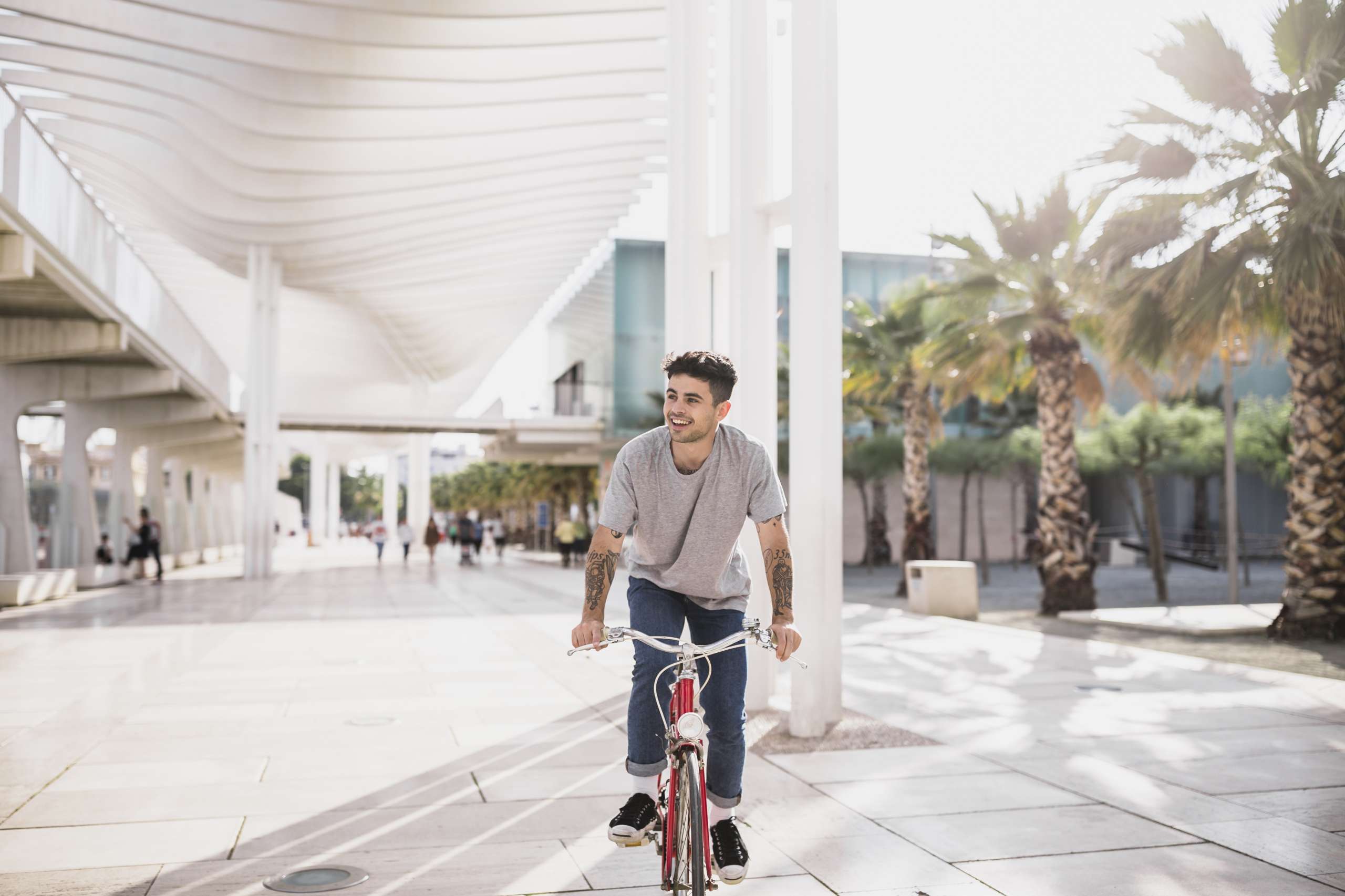
Soft mobility encompassing walking, cycling, e‑scooters, and other forms of micro‑transport is becoming an increasingly visible part of Dubai’s urban rhythm. As the city advances its long‑term planning agenda, these modes are shaping how people move through neighborhoods, interact with public spaces, and engage with retail and F&B clusters. What makes this shift particularly relevant is the behavioral dimension behind it: the choices people make about where they walk, the environments they gravitate toward, and the micro‑interactions that occur along these routes. These patterns are now central to understanding the broader direction of GCC urban mobility trends.
For organizations across mobility, government, retail, and F&B, as well as sectors where movement directly shapes experience, such as real estate, mobility services, tourism, healthcare, education, and public‑realm development, these everyday behaviours offer a valuable lens. Soft mobility produces observable actions that reveal how people navigate convenience, comfort, and community, factors that influence commercial performance, service design, and spatial planning.
Sapience brings structure to this evolving landscape through UAE mobility consumer insights, fieldwork, and behavioural research, drawing on its expertise as the best market research agency in Dubai. By interpreting how people move and what those movements signal, we equip stakeholders with the intelligence needed to design responsive environments, anticipate demand, and align with Dubai’s evolving urban identity.
Dubai’s Shift Toward Human‑Scale Mobility
Dubai’s urban development agenda is placing growing emphasis on movement at the human scale, a direction that aligns strongly with the city’s Vision 2040 framework. Walkable districts, connected cycling routes, shaded pedestrian corridors, and accessible micro-mobility options are now core components of how new communities are planned. Reflecting broader Dubai smart city mobility trends, these elements are embedded into zoning updates, master plans, and public-realm investments to create environments where everyday journeys feel shorter, more intuitive, and more socially engaging.
Government bodies are central to advancing this shift. The expansion of district-level cycling tracks, upgraded waterfront promenades, safer pedestrian crossings, and climate-responsive shading systems reflects a coordinated effort to make soft mobility viable year-round. These initiatives also contribute to the broader momentum behind cycling infrastructure in the UAE, which continues to expand across both residential districts and major leisure corridors. Enhanced last-mile links to metro and bus networks further demonstrate how policy and planning are shaping real behavioural change in the city.
For organizations operating across real estate, mobility services, tourism, healthcare, education, and public-realm development, understanding how these planning decisions influence on-ground movement is essential. As a GCC urban planning research company, Sapience helps stakeholders interpret how upgraded infrastructure translates into lived experience, how people adjust their routes, how spaces are used at different times of day, and what comfort, shading, accessibility, and safety mean for actual mobility adoption. This perspective is equally valuable for private operators adapting to the rise of soft-mobility corridors and expanding cycling networks across the Emirates.
How Mobility Shapes Urban Consumer Behavior
Patterns of movement in Dubai reveal how people make everyday decisions, where they choose to go, how long they stay, and how comfortable they feel moving through different environments. Walking routes, cycling paths, and micro-mobility corridors create a slower, more perceptive mode of travel compared to car-based movement. At this scale, people notice shading, seating, signage, greenery, and the overall character of a neighbourhood, making soft mobility a reliable lens for understanding real on-ground behaviour rather than just transport choices.
Across the city, mobility habits vary meaningfully between demographic groups, with expat vs local consumer behavior in the UAE showing distinct patterns. Expat residents tend to walk and cycle more frequently in mixed-use, lifestyle-oriented districts where public-realm design supports slower, informal movement. Emirati consumers, on the other hand, are more likely to engage with soft mobility in leisure, waterfront, and family-oriented destinations, where comfort, accessibility, and social experience are central. These differences influence not only route selection but also peak activity periods, levels of outdoor engagement, and how various groups interact with amenities, services, and public spaces.
For businesses, developers, and city planners, these behavioural nuances have implications that extend far beyond retail and dining. Soft mobility affects how people access clinics and community facilities, how students move across education hubs, how tourists explore neighbourhoods, and how residents evaluate liveability when choosing homes. By analysing these patterns through ethnographic fieldwork, behavioural mapping, and on-ground observation, Sapience, working as a qualitative research agency in Dubai, helps stakeholders understand how everyday mobility choices translate into real decisions about place, comfort, and engagement. This evidence-based perspective supports the design of environments, services, and experiences that align with Dubai’s evolving urban behaviours.
Multi‑Sector Implications of Soft Mobility
Soft mobility is reshaping how sectors across Dubai and the wider GCC operate, plan, and engage with the people who use their spaces and services. In retail, walkable districts and human‑scale movement elevate the quality of footfall, shifting it from transactional to experiential. Brands benefit from spontaneous discovery, longer dwell times, and more frequent repeat visits, behaviours that are difficult to cultivate in car‑dependent environments. The F&B sector experiences this shift even more directly: shaded promenades, neighbourhood cafés, and accessible dining streets encourage unplanned stops and casual exploration, reinforcing Dubai’s evolving café culture and strengthening hyperlocal dining patterns.
Real estate developers are increasingly embedding soft mobility into community design, recognising its influence on liveability and long‑term value. Shaded walkways, mixed‑use clusters, and micro‑transport access points are becoming core components of new developments, aligning with broader Dubai smart city mobility trends and the city’s ambition to create more connected, human‑centred neighbourhoods.
Mobility services, from bike‑sharing networks to e‑scooter fleets are expanding in parallel with improvements to cycling infrastructure in the UAE, offering residents more flexible last‑mile options and reducing reliance on private vehicles. Tourism benefits from this shift as well: walkable cultural districts, waterfronts, and heritage zones encourage slow, immersive exploration, making Dubai’s urban destinations more appealing to visitors seeking authentic, ground‑level experiences.
Healthcare sees meaningful advantages as walkable environments promote physical activity, improve air quality, and create safer pedestrian zones, factors that contribute to stronger preventive health outcomes. In education, soft mobility supports safer and more efficient student movement through pedestrian‑first pathways, shaded cycling routes, and reduced congestion around schools and campuses.
Public spaces, parks, plazas, waterfronts, and cultural hubs are being reimagined around human‑scale mobility, increasing dwell time, social interaction, and community engagement. These spaces become more than transit corridors; they evolve into active social environments that support wellbeing and urban vibrancy.
Soft mobility is emerging as a cross-sector approach for creating urban environments that are more liveable, connected, and commercially resilient, a trend supported by insights from Sapience, the GCC’s trusted urban planning research company.
Micro‑Transport & Short‑Distance Journeys
Micro‑transport, particularly e‑scooters and shared bikes, has become a defining layer of short‑distance mobility across Dubai. What began as a convenience‑driven alternative has evolved into a structured movement pattern, especially in districts where mixed‑use planning supports compact, walkable ecosystems. In these areas, micro‑transport naturally replaces car trips for everyday errands, leisure movement, and last‑mile connectivity, creating a fluid link between residential zones, commercial clusters, and transit infrastructure.
A closer look at e‑scooter usage trends shows that adoption is strongest in neighbourhoods with shaded pathways, protected lanes, and well‑distributed docking stations. Riders gravitate toward routes that feel intuitive, safe, and efficient, conditions that significantly increase repeat usage and expand the role of micro‑transport in daily routines. These behaviours reflect a broader shift toward flexible, human‑scale mobility that complements Dubai’s evolving urban form.
Convenience remains the most powerful behavioural driver. The ability to move quickly between homes, offices, retail destinations, and metro stations, without the friction of parking, congestion, or long detours, makes micro‑transport an appealing alternative to private vehicles. This shift aligns with Dubai’s wider ambition to strengthen public transport integration in Dubai, creating seamless connections between metro, bus, and micro‑mobility networks. As multimodal hubs become more accessible, micro‑transport increasingly functions as the glue that binds the system together.
Infrastructure and regulation also shape adoption. Districts with continuous cycling lanes, clear signage, and geofenced safety zones see higher rider confidence and more consistent usage. Conversely, fragmented networks or limited safe riding areas create barriers that suppress demand, highlighting the importance of cohesive planning and user‑centred design.
Sapience helps operators, developers, and policymakers understand how micro‑transport is evolving in real‑world contexts. Through fieldwork, behavioural observation, and mobility analytics, Sapience identifies what drives adoption, where infrastructure gaps limit usage, and how riders respond to pricing models, safety frameworks, and network design. This evidence‑based approach enables stakeholders to optimise fleet deployment, refine service models, and build micro‑mobility systems that are safer, more intuitive, and fully aligned with Dubai’s long‑term mobility vision.
Designing Soft Mobility for the UAE Context
Designing soft mobility for the UAE requires a deep understanding of climate, culture, and comfort, factors that significantly influence how people choose to move through the city. The UAE climate impact on mobility is especially pronounced, making shaded walkways, cooling technologies, and heat‑resilient materials essential components of any pedestrian‑first environment. Dubai’s public‑realm strategies increasingly reflect this reality, incorporating shaded corridors, misting systems, and climate‑responsive landscaping to ensure that walking and cycling remain feasible throughout the year.
Cultural expectations also play a defining role in shaping mobility adoption. Family‑friendly pathways, inclusive design, and safe, well‑lit routes are central to encouraging broader participation across age groups and communities. These considerations influence everything from pathway width and seating placement to the integration of rest areas and gender‑sensitive design cues. As global mobility concepts are adapted to local realities, Dubai continues to refine its approach, balancing international best practices with the social pace and lifestyle patterns unique to the region.
For operators and policymakers, this context creates clear opportunities to strengthen what is already taking shape. The growing use of e‑scooters and shared bikes, the rollout of regulated soft‑mobility zones, and the emphasis on climate‑aware public‑realm upgrades all point to a more coordinated ecosystem. Within this landscape, GCC micro‑mobility regulations are becoming an important reference point, guiding how cities structure safety requirements, operational standards, and permitted usage zones. Supporting this evolution, Sapience provides the behavioural, regulatory, and infrastructural insights needed to design systems that work for the UAE’s environment and its people. Being an established government market research agency in Dubai, we help stakeholders align technology, planning, and cultural understanding to build soft‑mobility networks that are resilient, inclusive, and tailored to the realities of life in the Emirates.
Conclusion
he growing prominence of soft mobility is redefining how people interact with Dubai’s urban environment. Insights emerging from urbanization research in the UAE show that walking, cycling, and micro‑mobility are influencing how residents and visitors assess the comfort, accessibility, and character of different districts. These behaviours shape the performance of retail and F&B destinations, the usability of residential communities, and the accessibility of education, healthcare, tourism, and public‑realm settings. What becomes evident is that spatial ease and human‑scale movement are increasingly pivotal to how people decide where to spend their time and which neighbourhoods they form lasting connections with.
For organisations developing retail and mobility strategies for Dubai, this shift carries clear strategic implications. Retail and F&B environments benefit when designed around foot‑led exploration; real estate developments gain relevance when pedestrian networks are integrated from the outset; and education, healthcare, tourism, and public‑realm assets perform better when movement systems are coherent and intuitive. Sapience translates these evolving behavioural patterns into practical direction, helping stakeholders design environments and services that reflect how people actually move through the city. Soft mobility is shaping not only how Dubai functions today, but how its next phase of urban and commercial development will take form.